
Divisive Reforms:
Historical Reactions to the Pian Holy Week Revisions

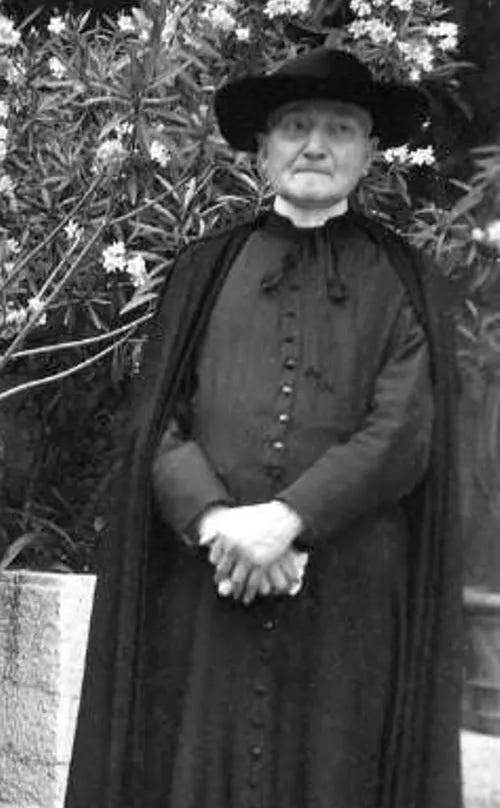
That which follows is an excerpt from an article on the Pian Holy Week reforms by the British Dr. Carol Byrne, recounting how these rites were received by some of the more influential ecclesiastical and lay personalities at the time, including, for example, Monsignor Leon Gromier (Ceremonieri under Pius XII, and Consultor to the Congregation of Rites under Popes St. Pius X, Pius XI, and Pius XII), Cardinal Francis Spellman of New York, Archbishop John Charles McQuaid of Dublin, and famous novelist-convert, Evelyn Waugh.
Note that the article from which this excerpt is snipped is #14 in a long-running series on the liturgical movement (the previous 13 installments can be viewed by scrolling down beneath the article), and the next several installments, pertaining specifically to the Pian Holy Week revisions can be read simply by clicking on the “continued” link at the conclusion of each installment.
In 2020, Dr. Byrne published a book on the liturgical movement titled “Born of Revolution: A Misconceived Liturgical Movement (Volume 1),” the context within which these Holy Week revisions transpired.
The footnotes are those of Dr. Byrne.
It is not generally appreciated just how controversial the 1951-1955 Holy Week reforms were in their day. Historical records exist to show that they were vehemently criticized by many Bishops, priests and lay people on account of the radical nature of the changes then initiated.
Among the most outspoken critics was Msgr. Léon Gromier, a distinguished Prelate of the Papal Household and a Canon of St. Peter’s Basilica. As a consulter to the Congregation of Rites since the time of Pope Pius X, he was in a position to speak with authority on the Holy Week ceremonies. His knowledge was legendary on all liturgical subjects from bugia to buskins and falbalas to faldstools, which made him the strongest of advocates for arguing the case for the traditional rites.
Msgr. Gromier, who had been publicly criticizing the Liturgical Movement since 1936, gave a conference in Paris in 1960. (5) (See here) In it he excoriated the 1955 Holy Week reforms, exposing the false liturgical science and the false reasoning behind them.
He did not hesitate to describe them as an “act of vandalism,” “an immense loss and an outrage to history,” “the negation of reasoned principles” and the product of a “pastoral mentality impregnated with a populist attitude, unfavorable to the clergy.” With reference to the liturgists who produced the reforms, he lamented that their “discretionary powers are vast, as are the abuses.”
Objections from Bishops (6) to the interim Holy Week changes of 1951 poured into the Vatican with requests to leave the traditional rites intact. The final and obligatory reform of 1955 was vigorously opposed by more Bishops, for instance Card. Francis Spellman of New York and Arch. John Charles McQuaid of Dublin (on the grounds that it might destabilize the faith of the Irish people). (7)
Among the laity, the Catholic newspapers of 1955-1956 were rife with objections. (8) The novelist, Evelyn Waugh, who had converted to Catholicism, considered the changes ruinous to his spiritual life and a danger to the faith itself, particularly among simple folk. (9)
No leeway for traditional rites
But, disregarding warnings about the consequences of changing long-established patterns of worship – the new rites would endanger the habitual, ingrained attitudes to the faith of devout Catholics – Pius XII issued his new liturgical laws and instructions in Maxima Redemptionis in 1955, and made the traditional rites illegal:
“Those who follow the Roman rite are bound in the future to follow the Restored Ordo for Holy Week… This new Ordo must be followed…” (10)
A tragedy for traditionally-minded Bishops
Pius XII used legislation to introduce arbitrary and unnecessary changes devised by revolutionaries. This put the law-abiding Bishops (who placed obedience to the Pope as their foremost duty) into an untenable position: They were thus maneuvered into implementing the reforms that they objected to on grounds of the Faith. In other words, giving them no choice but to comply forced them to act against their principles and their conscience.
Pius XII mandated the changes in the Holy Week ceremonies in 1955
And because Maxima Redemptionis legitimated the actions of progressivist clergy who had been implementing the reforms without the Pope’s authority for decades, it was a document fundamentally biased against the traditional rites.
Naturally, no mention was made in the Decree of the many Bishops who considered the reforms to be pastorally unsound. The claim that the Holy Week reforms were attended by “the greatest success everywhere” is highly tendentious. (11)
This reveals a quite considerable degree of contempt not only for traditionally-minded Bishops but also for those Catholics who were attached to their traditions and had never requested or welcomed such changes. Whether such a document against all the past of the Church had the power to bind the faithful is a question open to discussion.
In short, the 1955 Holy Week reform, whatever the degree of Pius XII’s complicity in it, was a papally-backed mechanism for re-ordering the liturgy to incorporate the basic wishes of the progressivists and to begin implementing their ideas for future changes. That is how the will of Bugnini’s Commission triumphed – and thus inescapably stifled opposition.
Footnotes:
L. Gromier, ‘La Semaine Sainte Restaurée’, in Opus Dei, 1962, n. 2, pp. 76-90. Opus Dei was a monthly journal edited by a French priest, Fr. Ferdinand Portier, who was known for his arrangement and promotion of Gregorian Chant.
These included Msgr. Felice Bonomini, Bishop of Como, Card. Giuseppe Siri, Archbishop of Genoa, and Msgr. Cornelio Cuccarollo, Archbishop of Otranto. Apud Alcuin Reid, The Organic Development of the Liturgy, Ignatius Press, 2005, p. 222, note 270.
Alcuin Reid, ibid., p. 231.
See, for example, The Catholic Herald and The Tablet.
Writing in The Spectator in 1962, Waugh stated: “During the last few years we have experienced the triumph of the ‘liturgists’ in the new arrangement of the services for the end of Holy Week and for Easter. For centuries these had been enriched by devotions that were dear to the laity – the anticipation of the morning office of Tenebrae, the vigil at the Altar of Repose, the Mass of the Presanctified. It was not how the Christians of the second century observed the season. It was the organic growth of the needs of the people,” apud Scott Reid, A Bitter Trial: Evelyn Waugh and John Carmel Cardinal Heenan on the liturgical changes, London: St Austin Press, 1996, pp. 24-25.
Sacred Congregation of Rites, General Decree and Instruction, Maxima Redemptionis, November 16, 1955, Acta Apostolicae Sedis, vol. 47, p. 840.
This claim was made by the Prefect of the Congregation of Rites, Cardinal Gaetano Cicognani.
Thank you for the clarity!
Christ is risen !